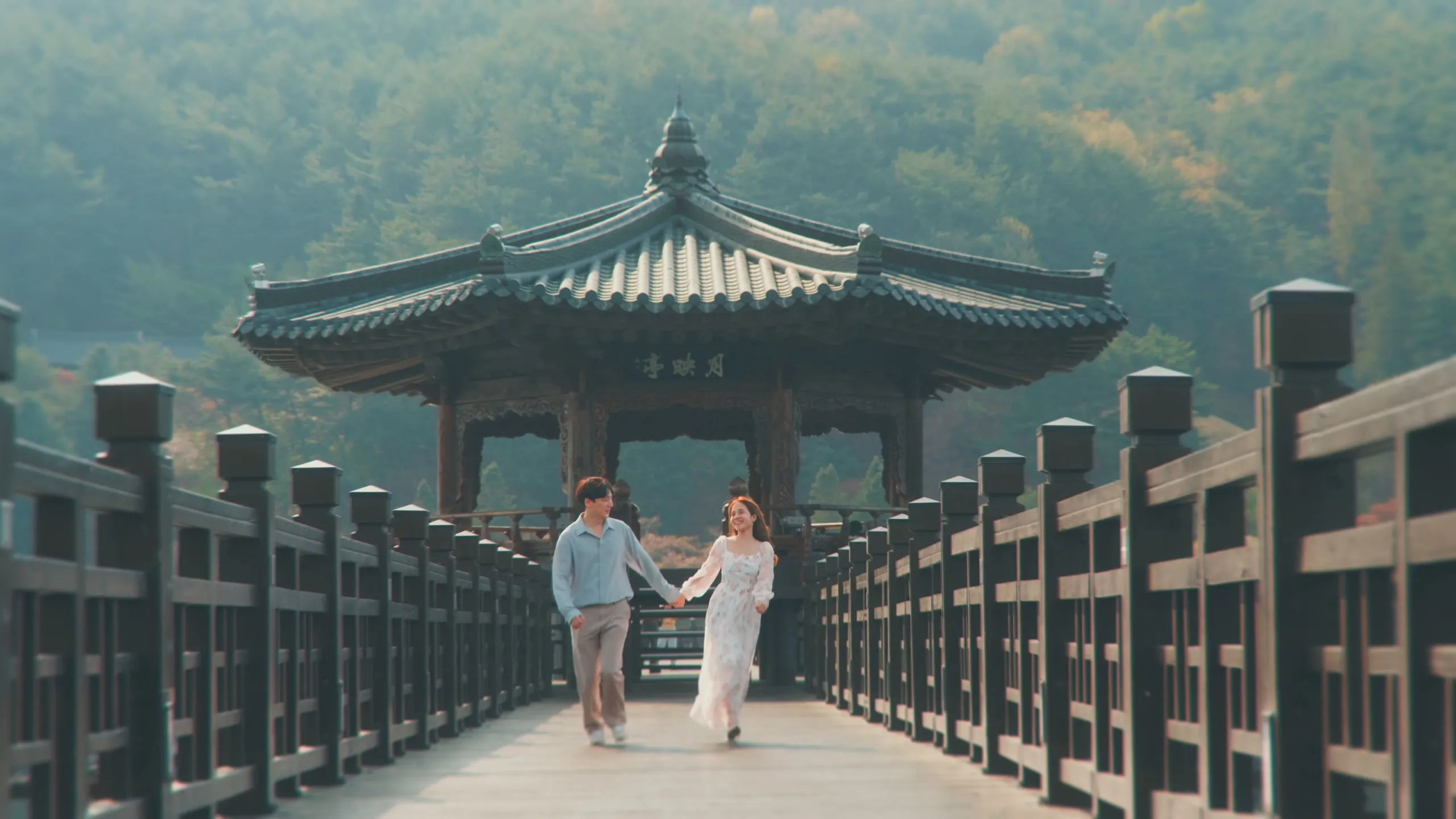
Story · Full-day pre-wedding
Finally, Us
Kristel & Suhyuk · Andong · 2025
iyagi
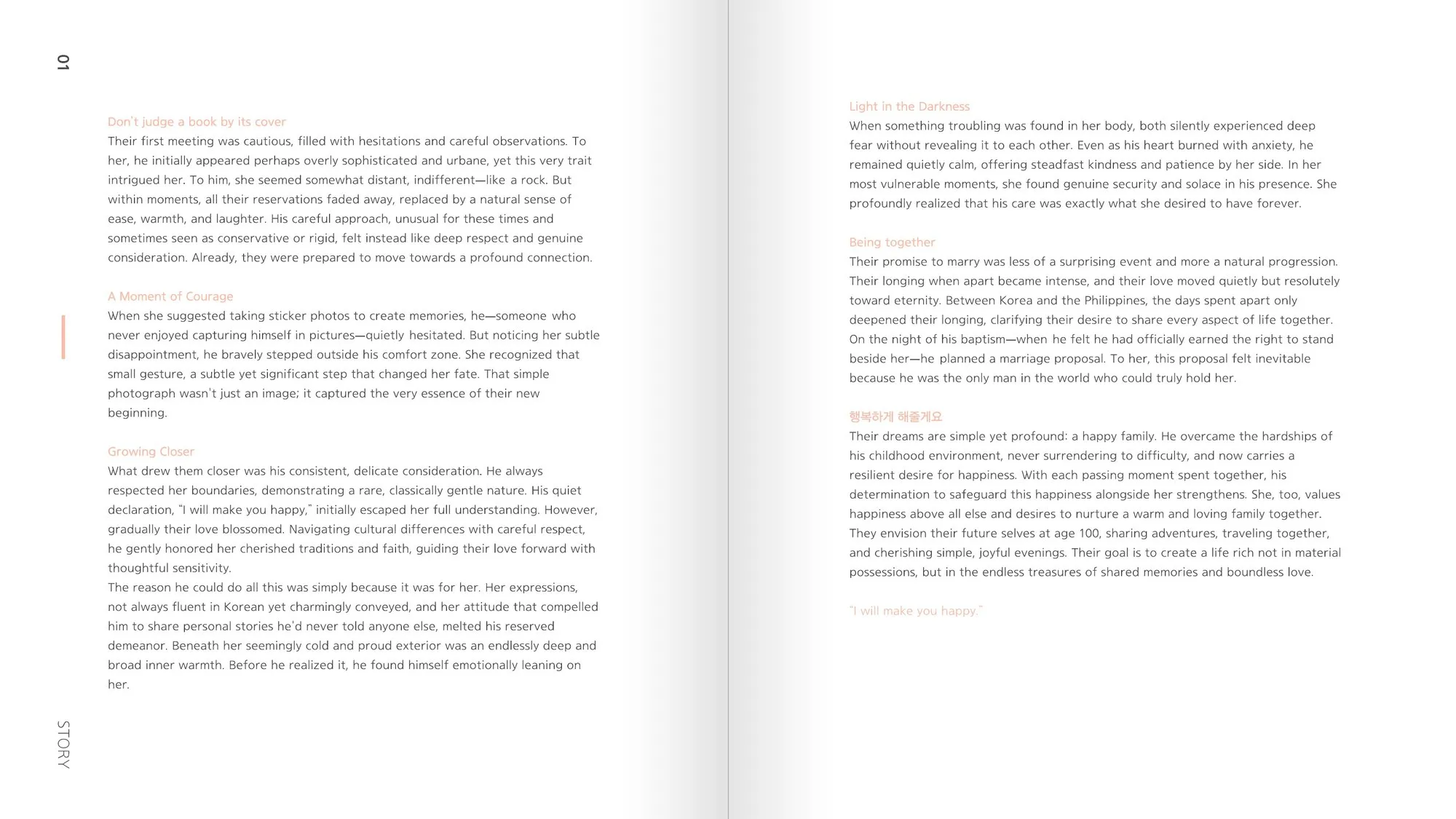
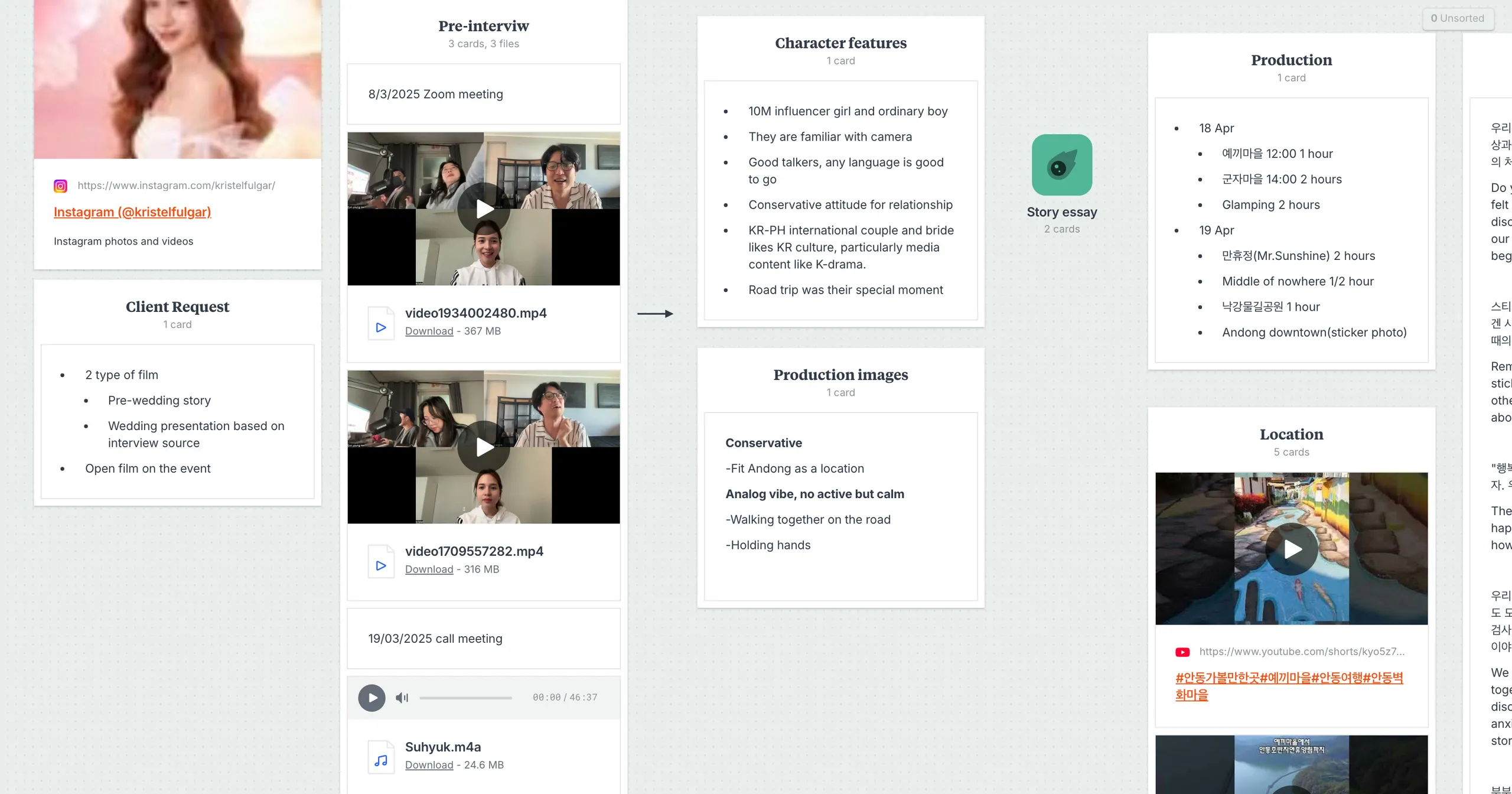
Kristel grew up in the Philippines on Korean drama. Suhyuk is Korean and reserved, the kind of man people call a seonbi, so we planned the shoot in Andong, the old town of scholars. We met them twice over Zoom and once more by phone in March 2025, and the film follows what they told us in those calls, from the sticker-photo booth on their second date to the reason she finally decided to marry him.
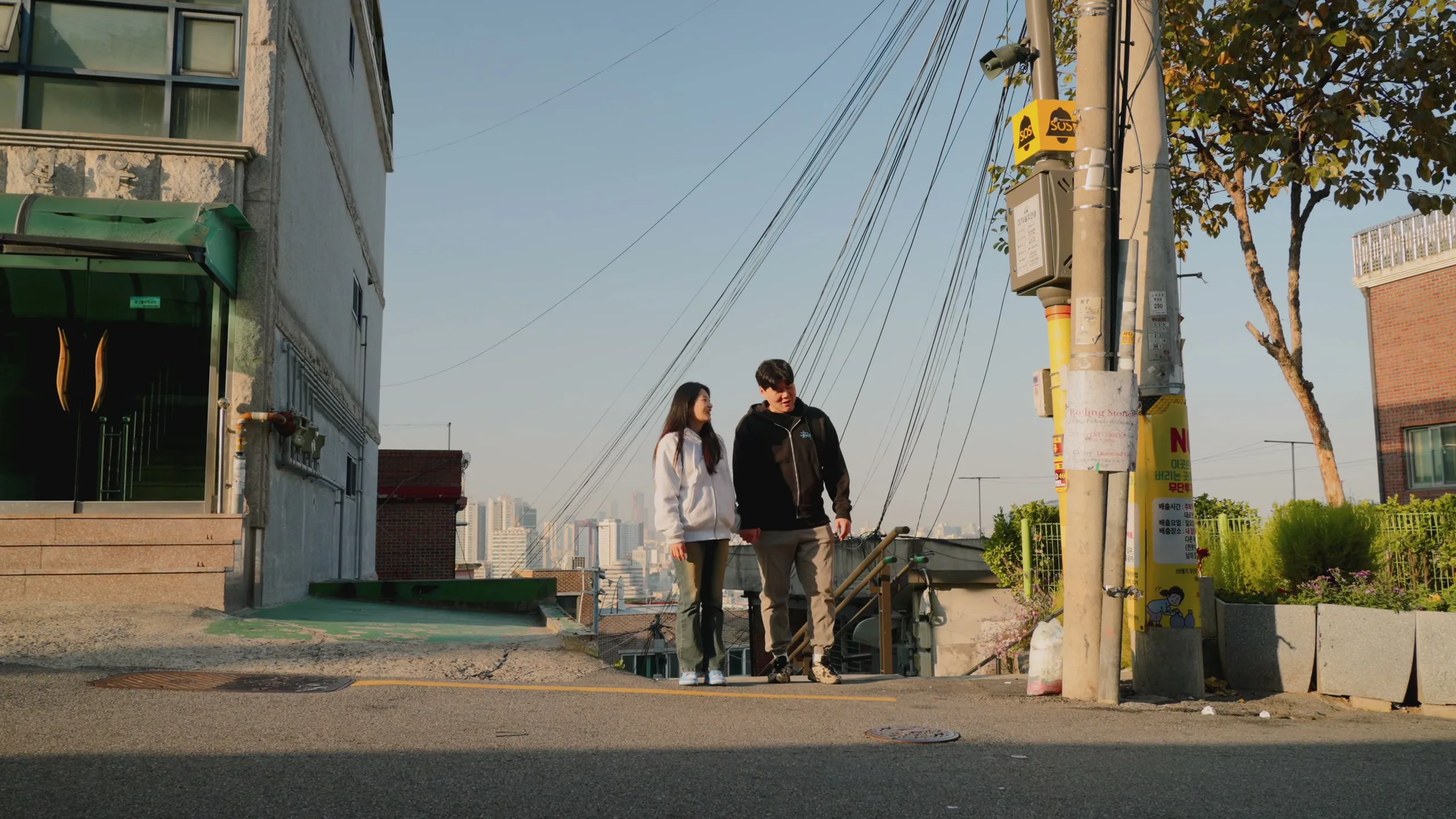
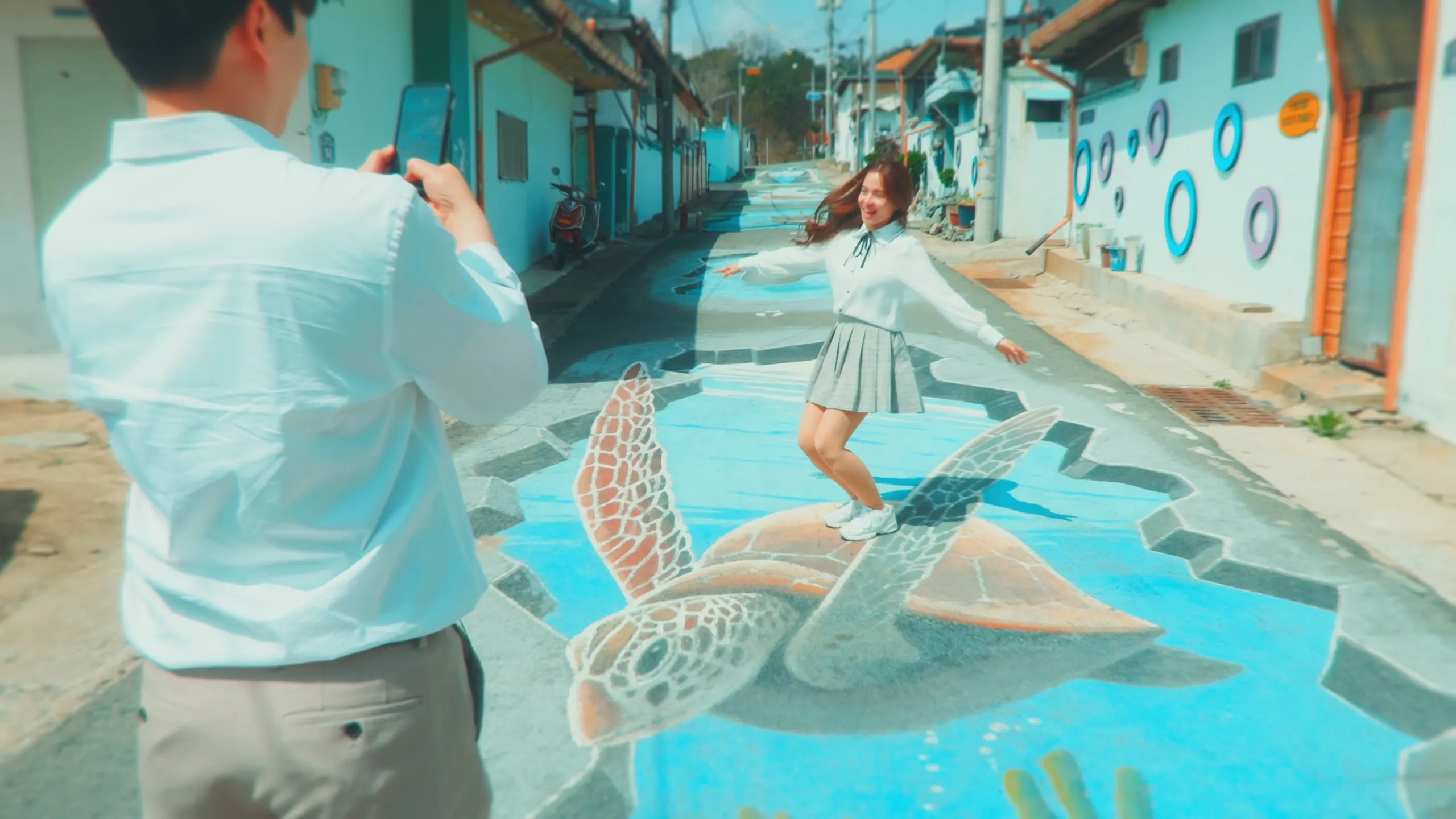
The film opens on a hanok porch in Gunja village, the two of them in cream and white, talking about first impressions. She thought he wasn't interested in her; he had thought the same about her, and it put them both at ease. We had heard the sticker-photo story in the first Zoom call, so we put a 인생네컷 sticker-photo booth on the old-street schedule and let them redo their second date on camera, pink ears and all, even though Suhyuk refuses photos when his own friends ask. There is no sit-down interview in this film. We asked our questions inside the scene, so her line about feeling safe for the first time lands on the porch where she said it.
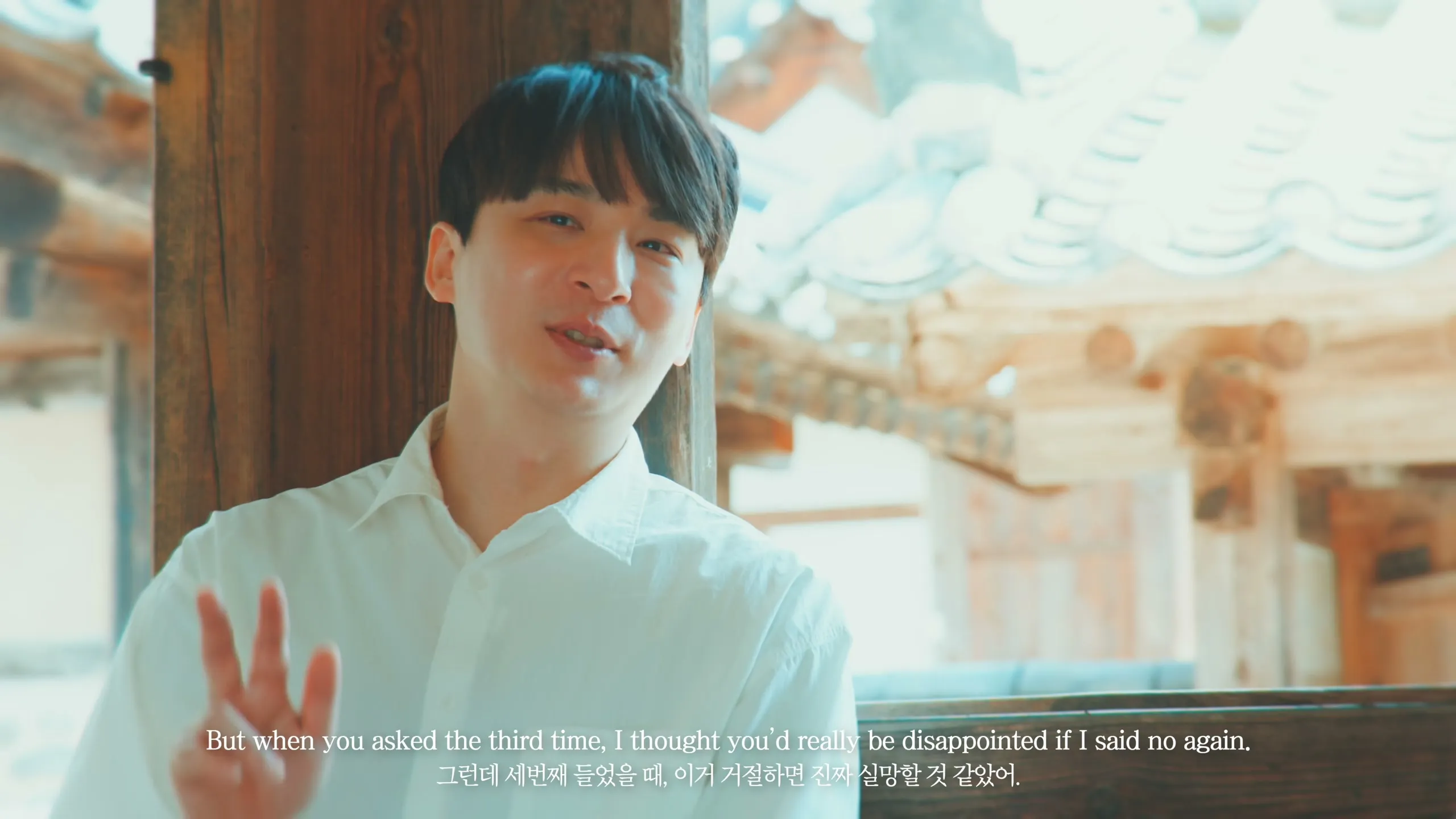
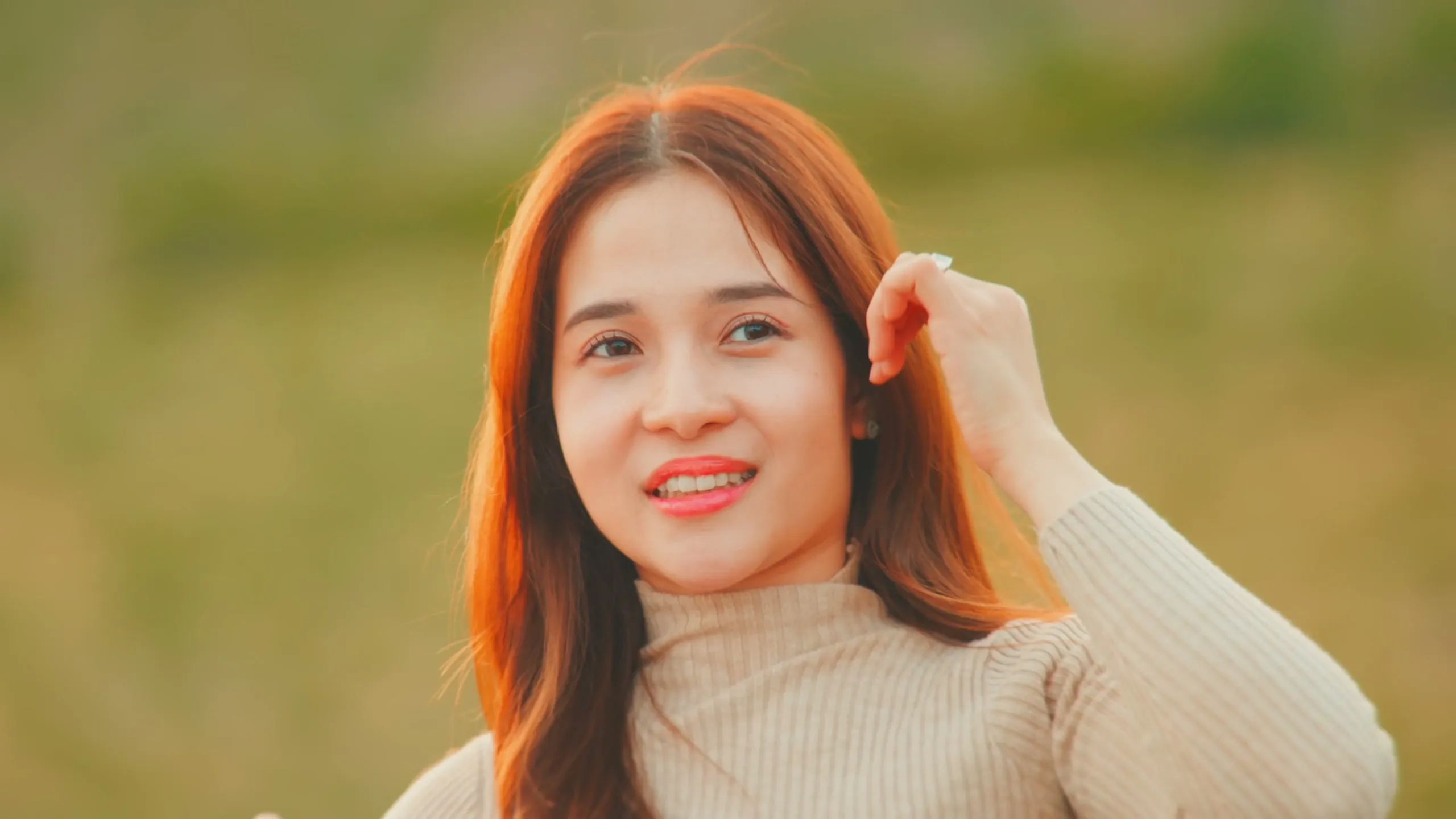
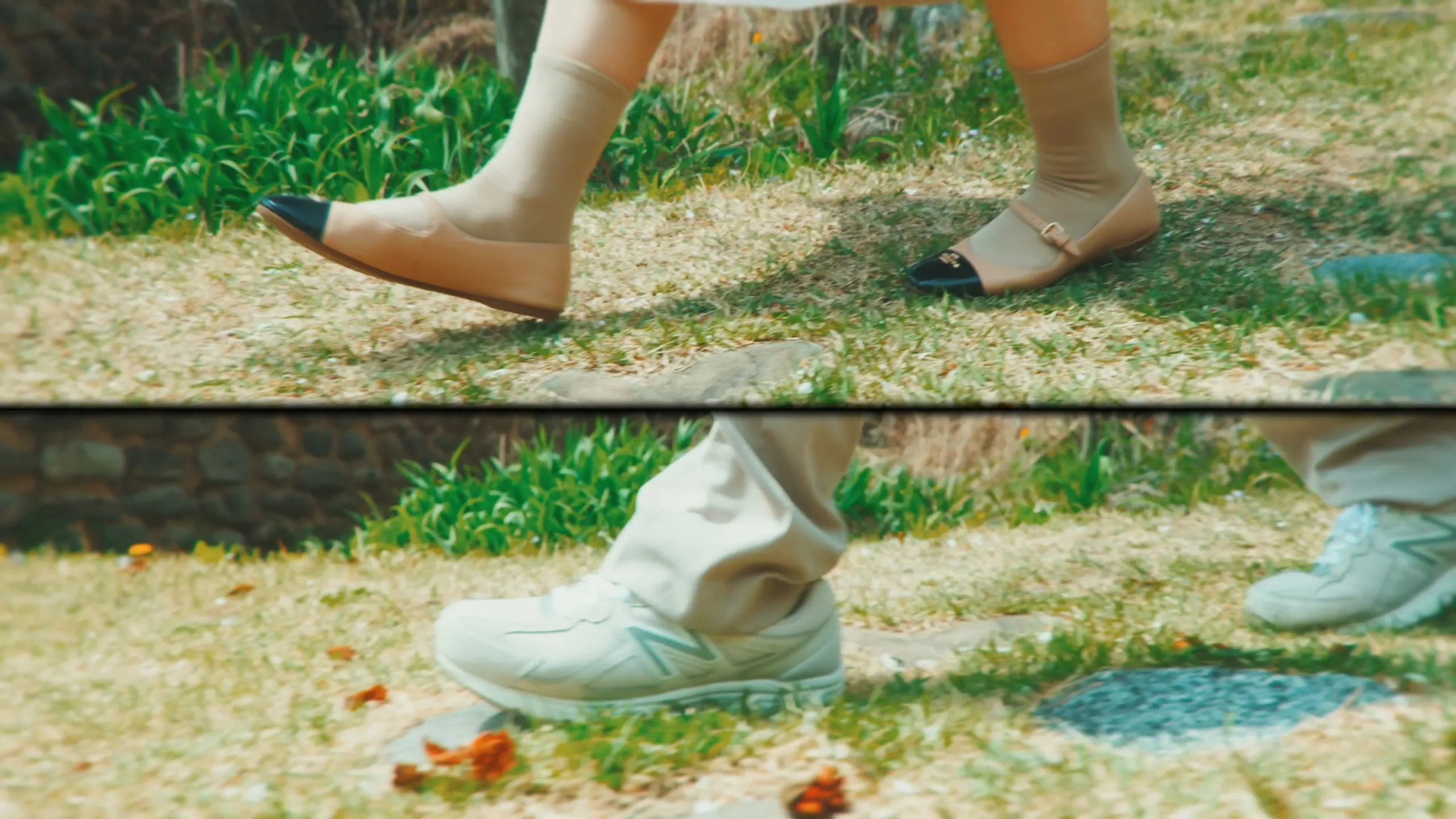
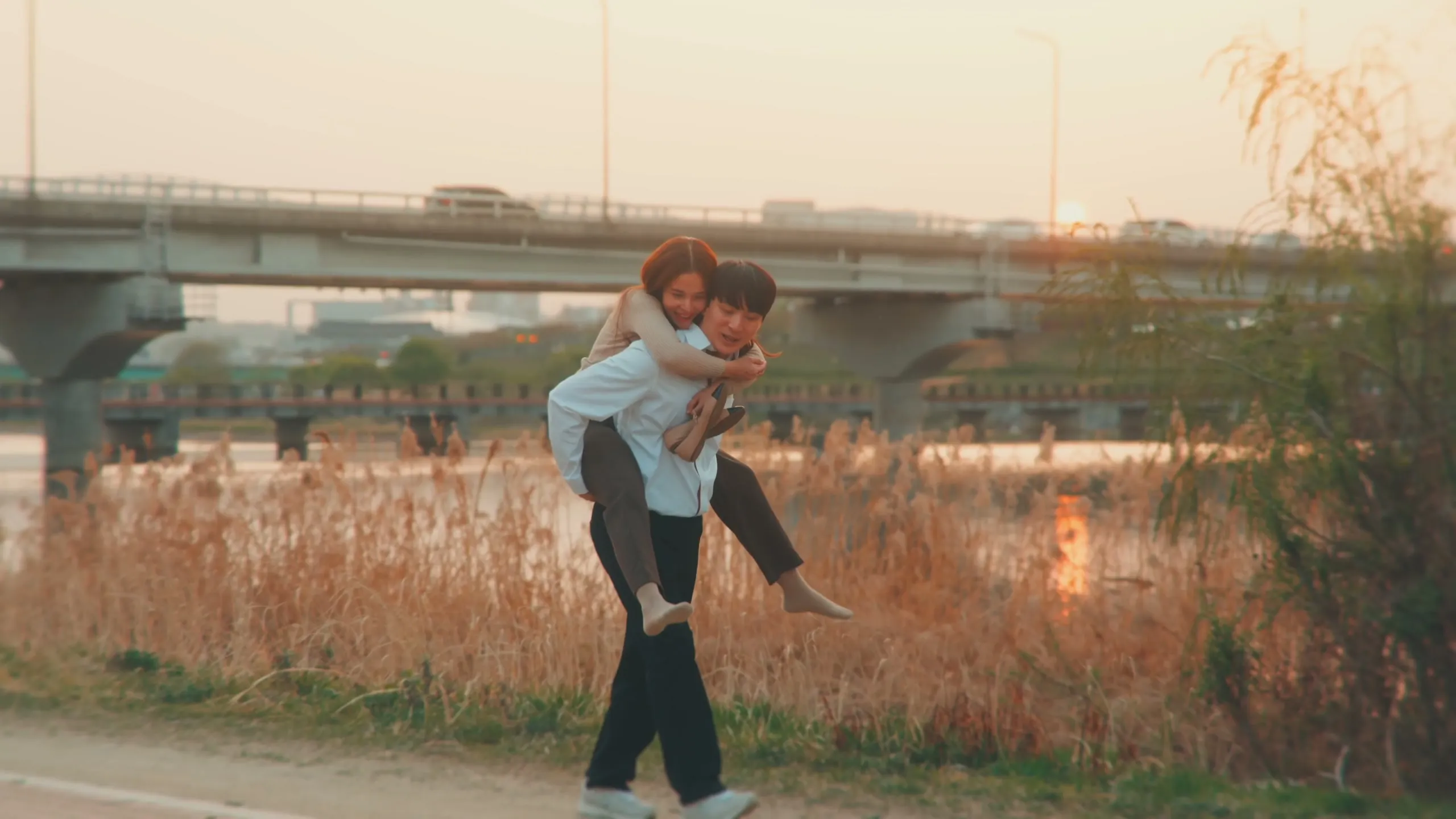
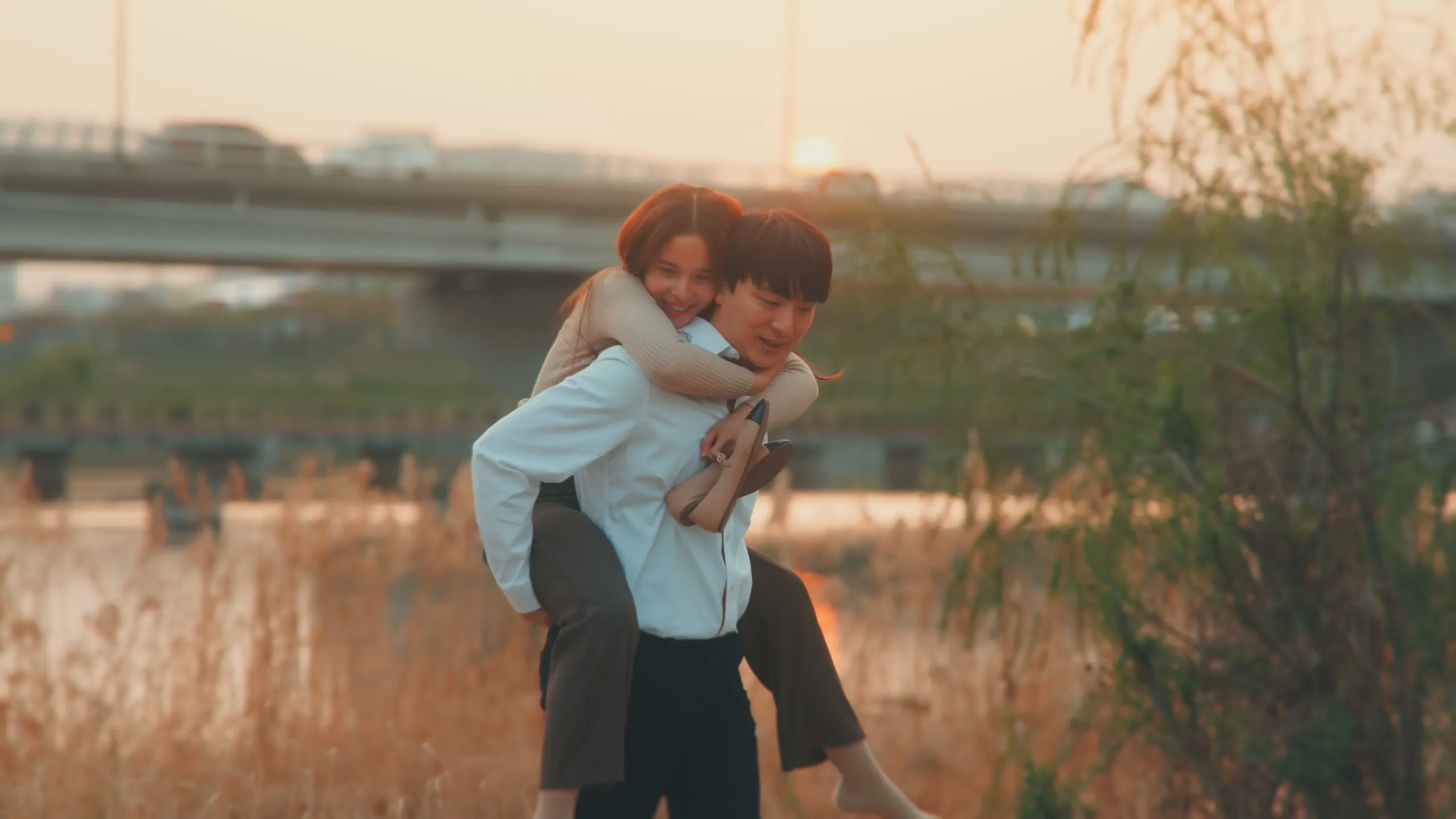
By the time we planned the shoot we already knew the confession story, from the calls and from the written Q&A Kristel filled out in her own words. Suhyuk had told her over chat, plainly, I will make you happy, and she was raised on Korean drama, waiting for the drama version, so she didn't catch that it was a confession at all. We staged that chapter twice: in hanbok along the stone walls, pink for her and pale blue for him, and again at the riverside fence at golden hour, where we asked how exactly he confessed and let the two of them take it from there. Her church did not allow dating a non-believer. Suhyuk converted on his own and decided to propose on the night he was baptized.
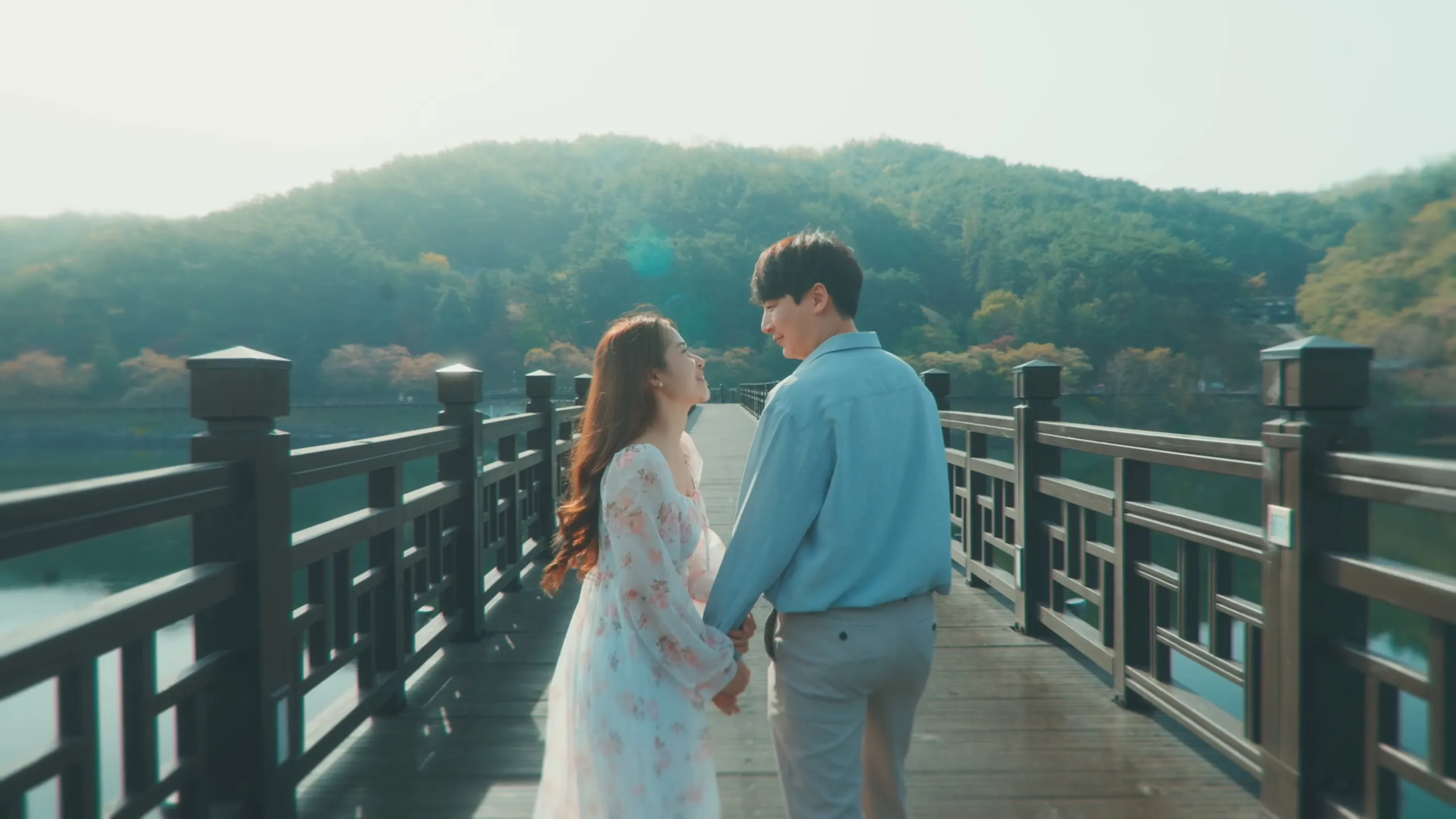
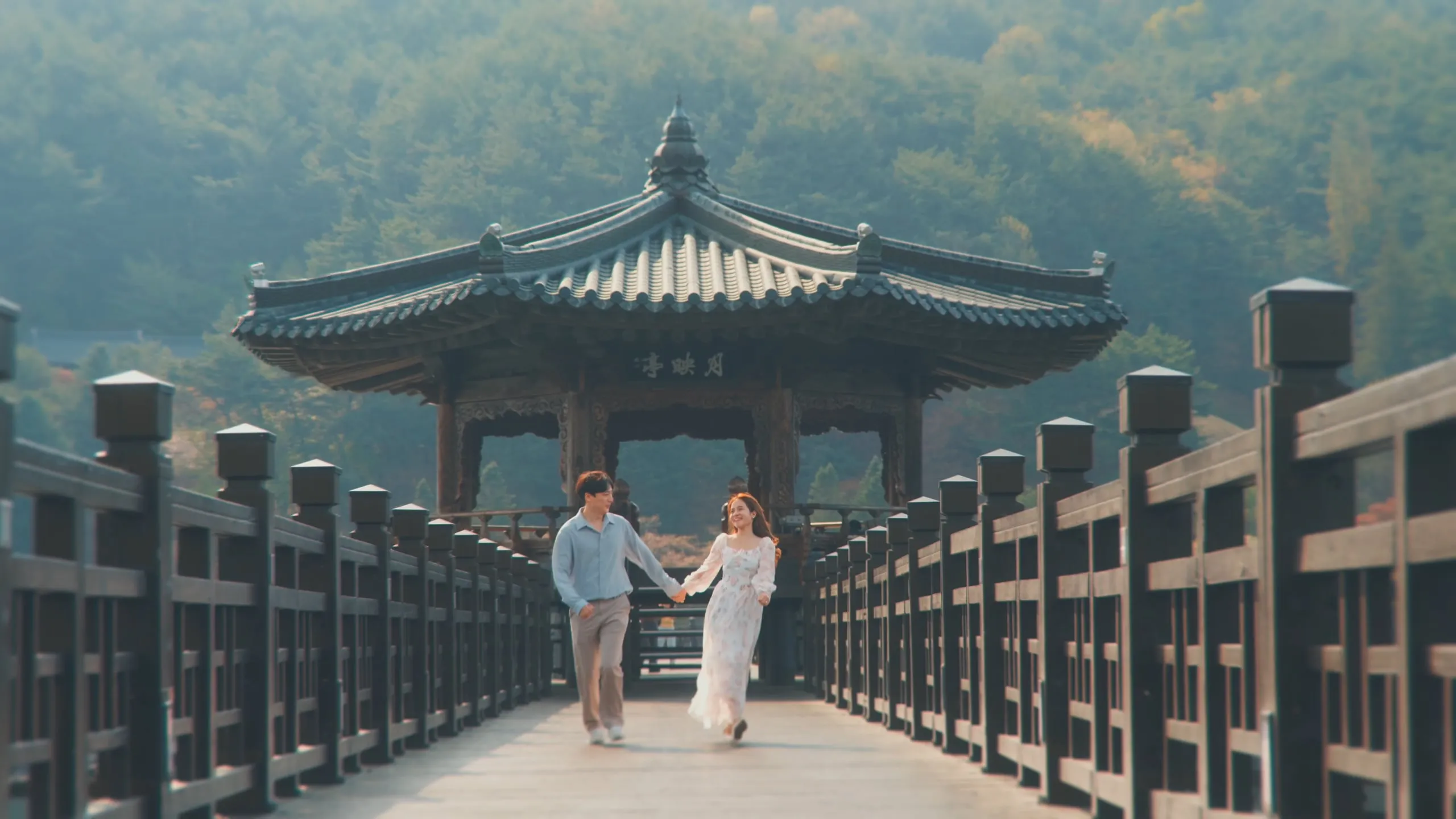
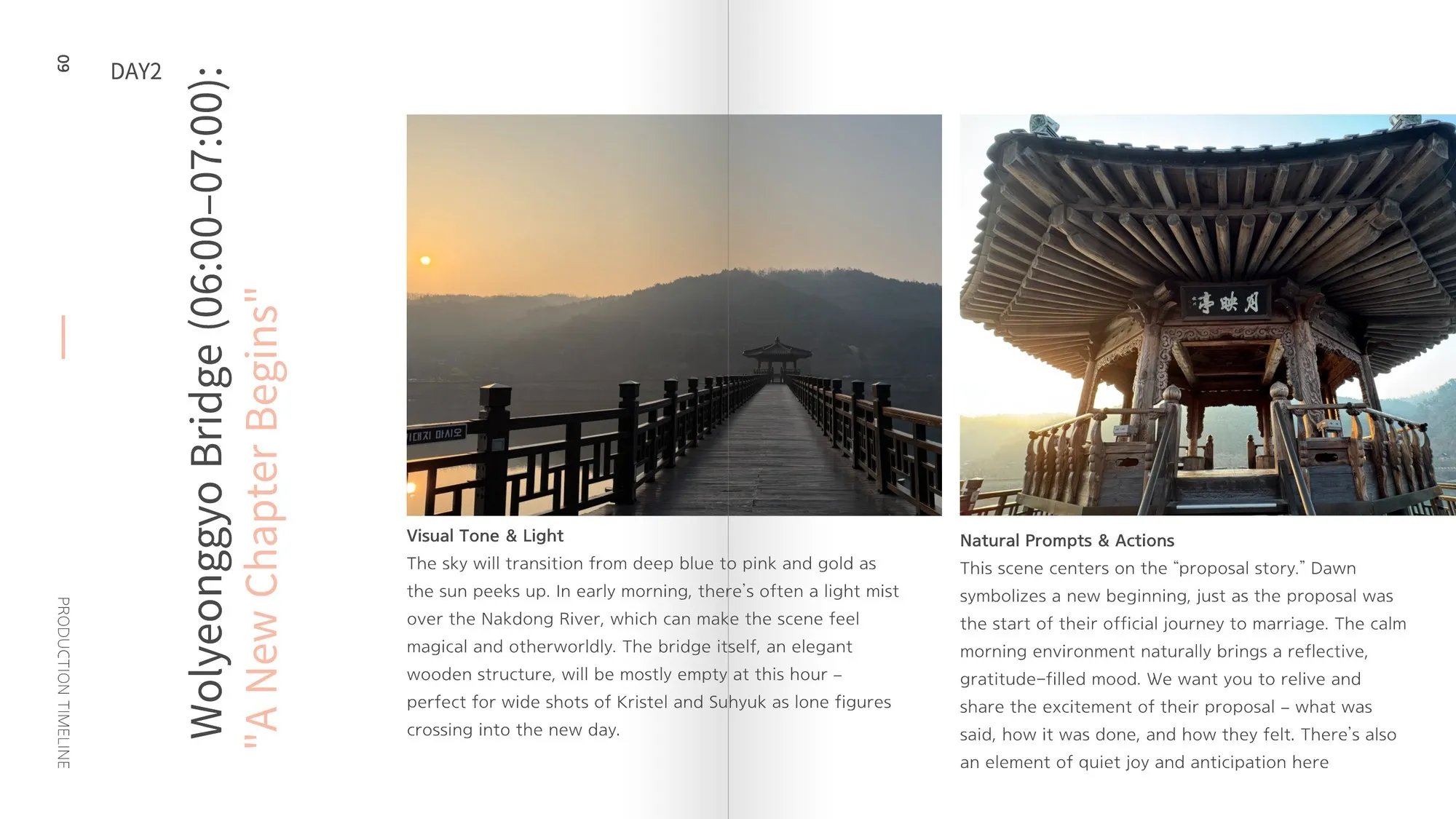
She had told us about January 2024 well before we rolled: a tumor, a biopsy she was still waiting on, and what she understood in that waiting, that she wanted a family of her own and that Suhyuk had stayed to care for her. We saved this for the caravan camp after dark, the smallest setup of the two days, just a fire and marshmallows and the two of them talking. Her real hospital clips run in black and white inside film-strip borders, so the memory sits apart from the color of the present, and the cut always comes back to the firelight. For the ending we got up before dawn at Wolyeonggyo, when the bridge is empty and the light comes up misty blue, and let them talk about kids and the years ahead.
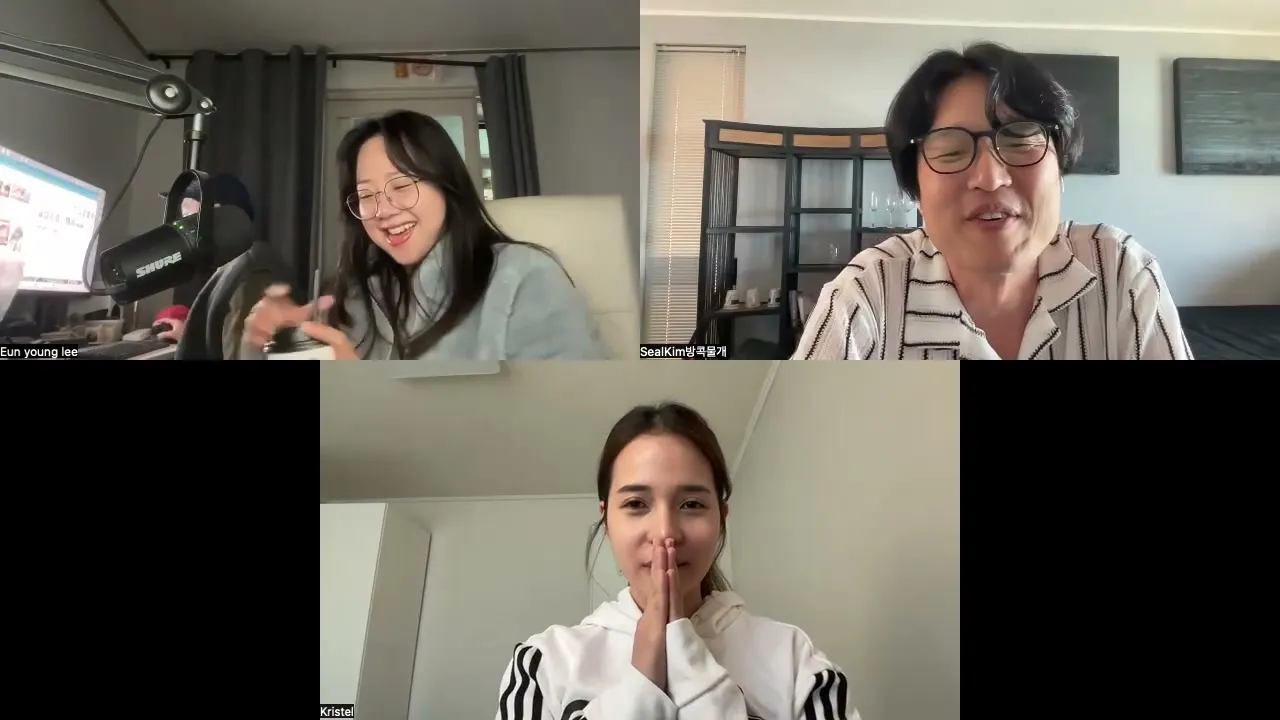
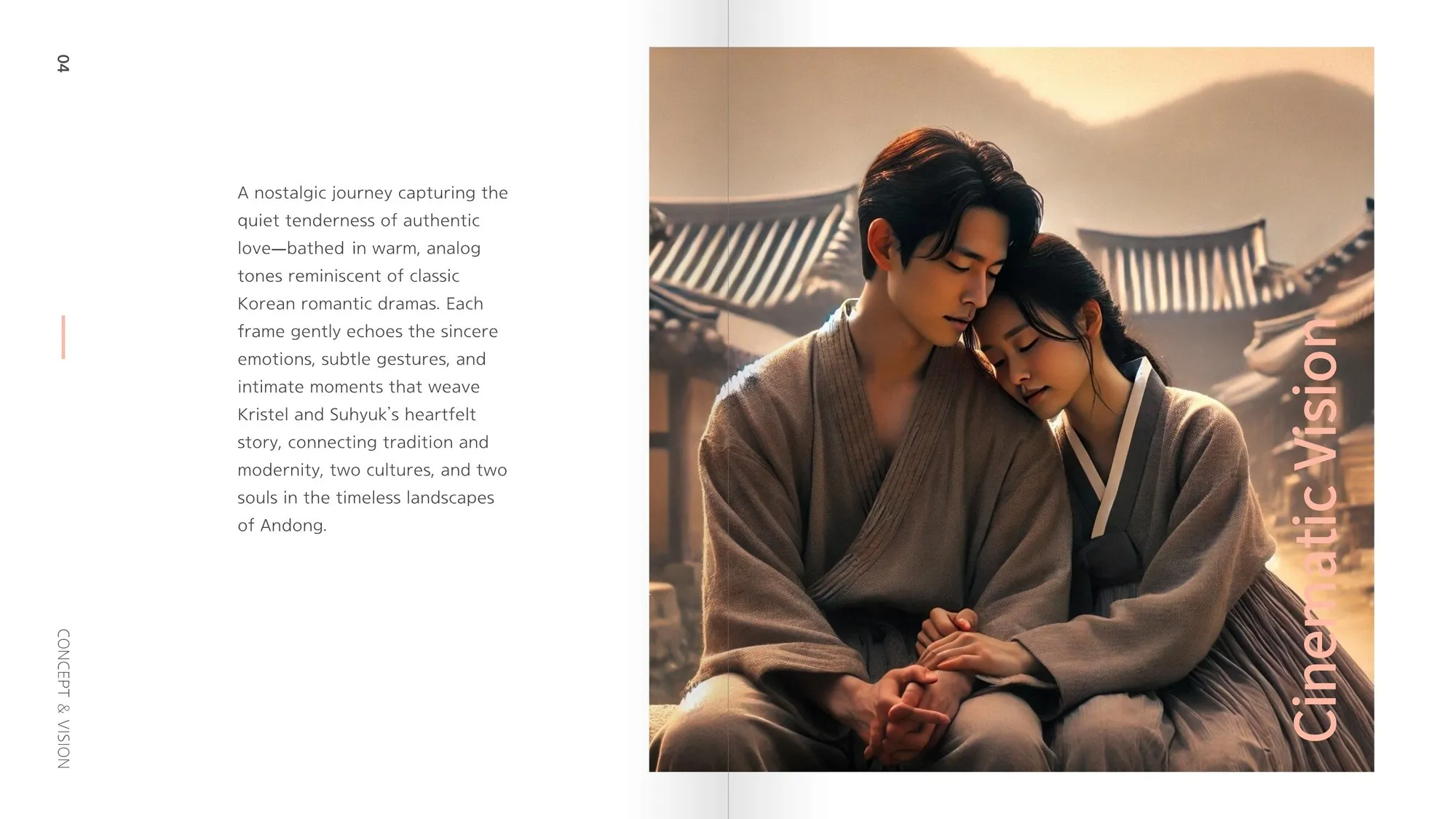
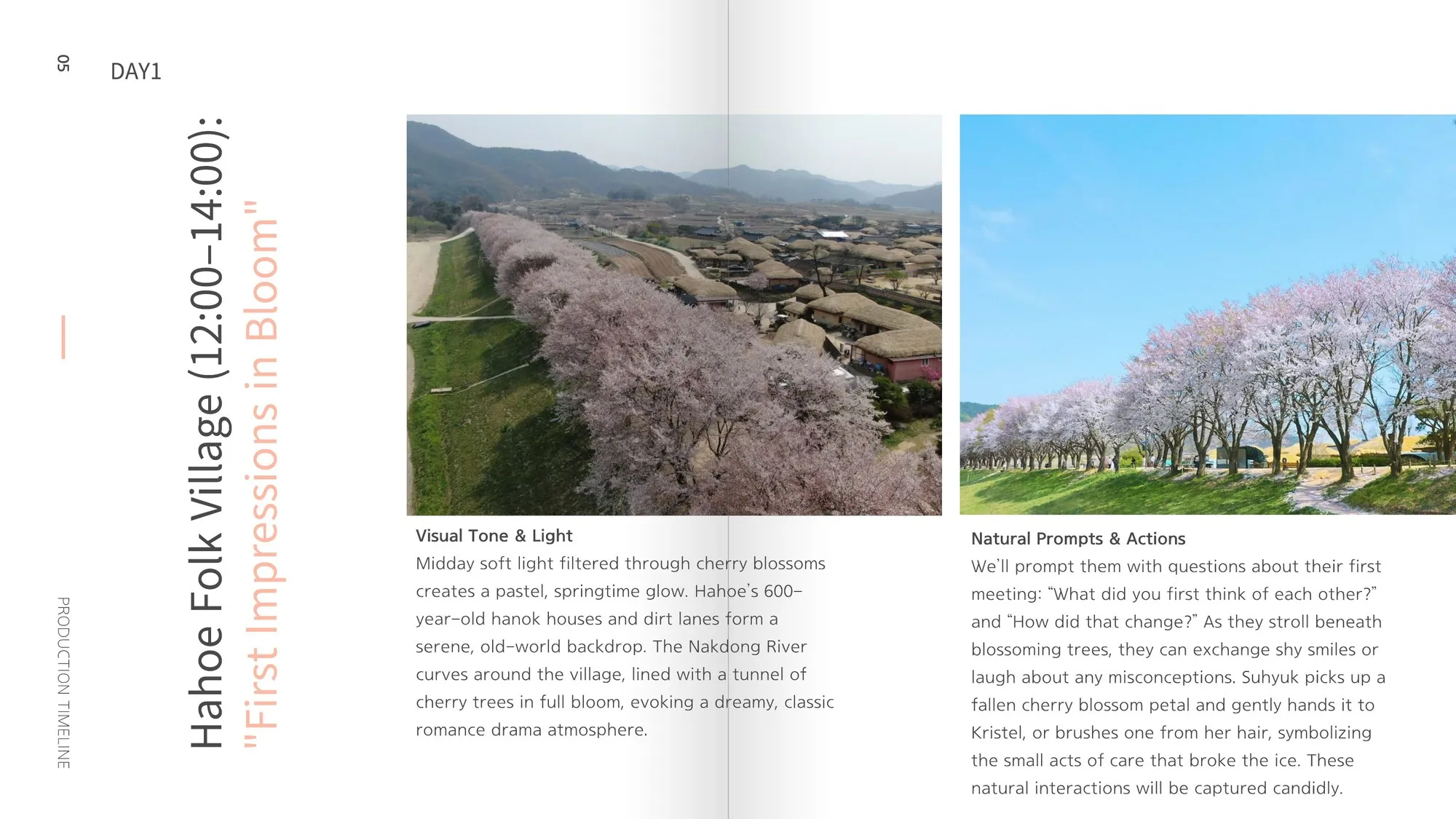
Kristel and Suhyuk asked for two films, this pre-wedding story and a separate cut to play at the wedding itself. Before the shoot we met them twice over Zoom and once by phone in March 2025, and Kristel filled out a written Q&A in her own words. The sticker booth, the chat confession, the tumor scare: everything in the film surfaced in those conversations before we chose a single location. Then we built a client deck that laid the story across two days in Andong, scene by scene, and went over it with them before anyone got on the road.
Suhyuk is reserved, the kind of man people call a seonbi, and Andong is the old town of scholars, so the town fit him before we ever scouted it. It was also practical: Hahoe and Gunja villages, the old street, the riverside, and Wolyeonggyo all sit within a short drive of each other, which let two days carry the whole story.
The client deck put Hahoe village at midday, sticker photos on the old street in the afternoon, the riverside at golden hour, the caravan camp after dark, and Wolyeonggyo at first light, when the bridge is empty and the mist is still on the water. Gunja village carried the hanbok chapter. The light in each scene is the light we scheduled for.
We never sat them down for a formal interview. The questions were asked inside each setting, so she asks him when he knew and he answers her right there on the porch. The one exception is a plain white room where Suhyuk speaks alone about her past; some things come out differently without the other person in the room.
The tumor scare was real, and Kristel gave us her own hospital footage from that winter. We kept it in black and white inside film-strip borders, so the memory reads as another time, apart from the pastel of the present. Both inserts cut back to the firelight, where she picks the story up in her own words.
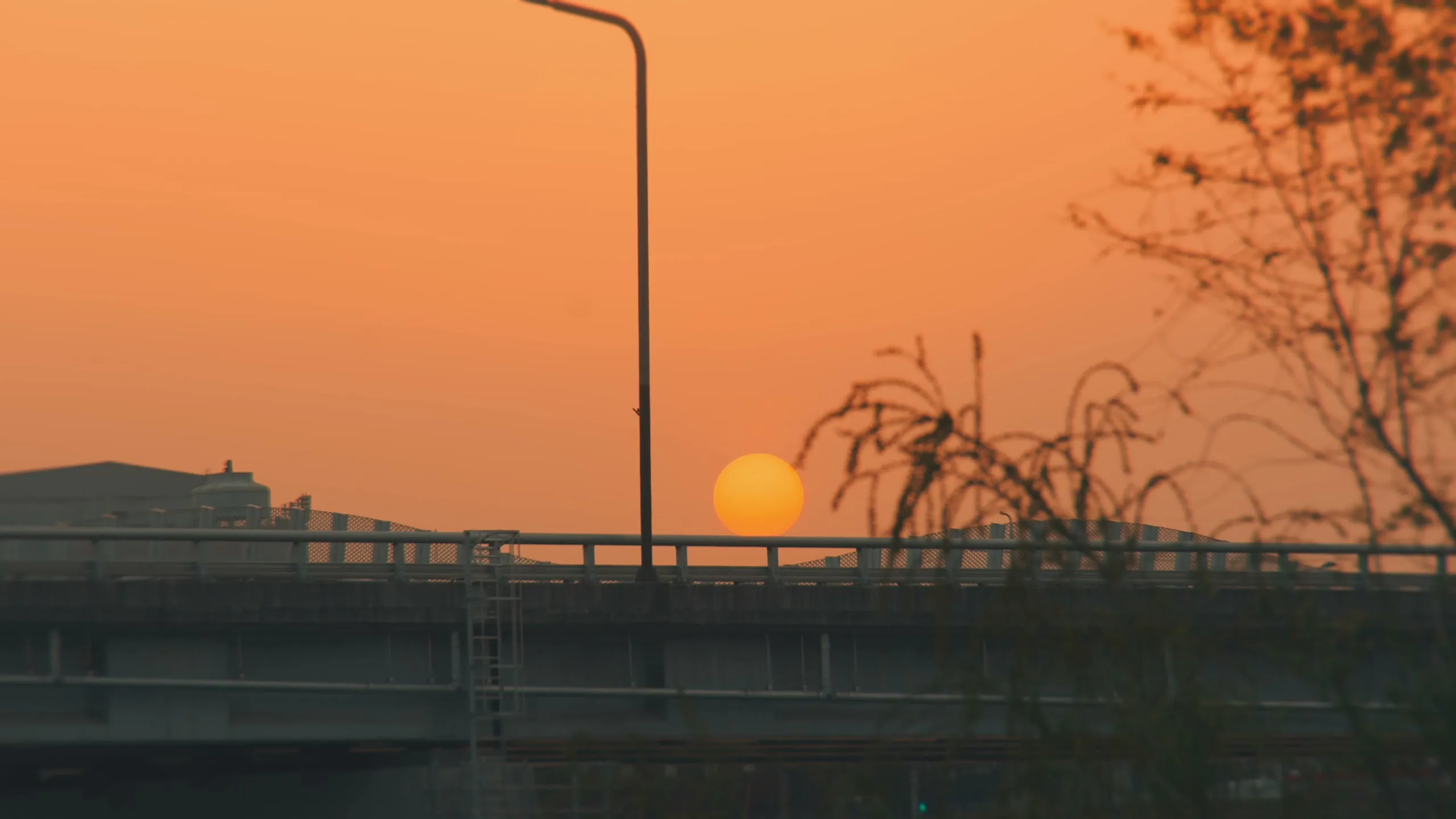
A soft pastel film look holds the two days together, low in contrast with a gentle bloom in the highlights. The hanok mornings stay ivory, the riverside warms to amber, the caravan night runs orange firelight against deep blue, and Wolyeonggyo comes up in misty blue-teal. The only breaks are the clean white of the solo room and the black and white of the hospital strips, and both are on purpose.
Shot on the day by our photographer, working right beside the film camera. Real photographs, not frames pulled from the video. Two crafts, one shoot, one team, and you keep both.
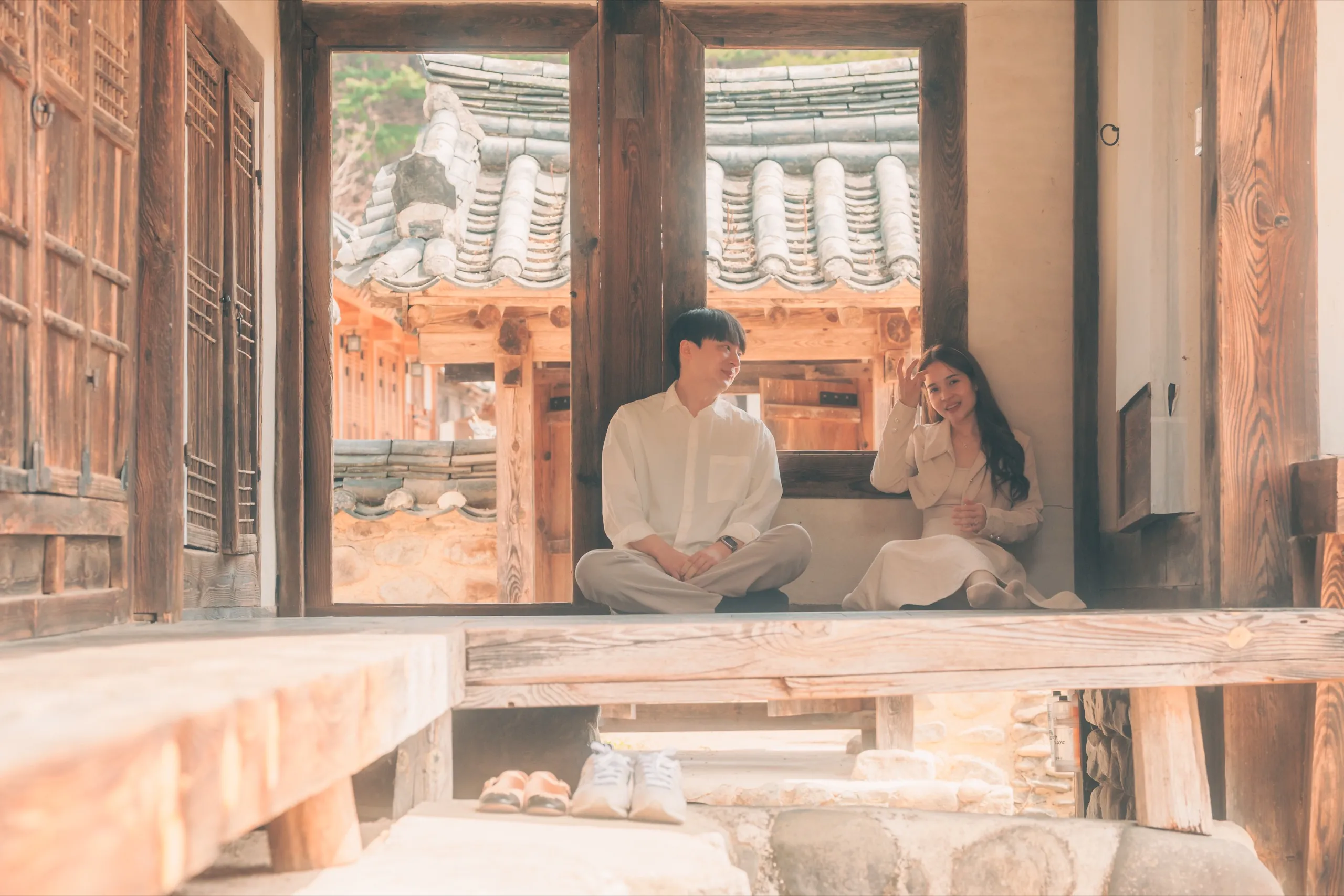
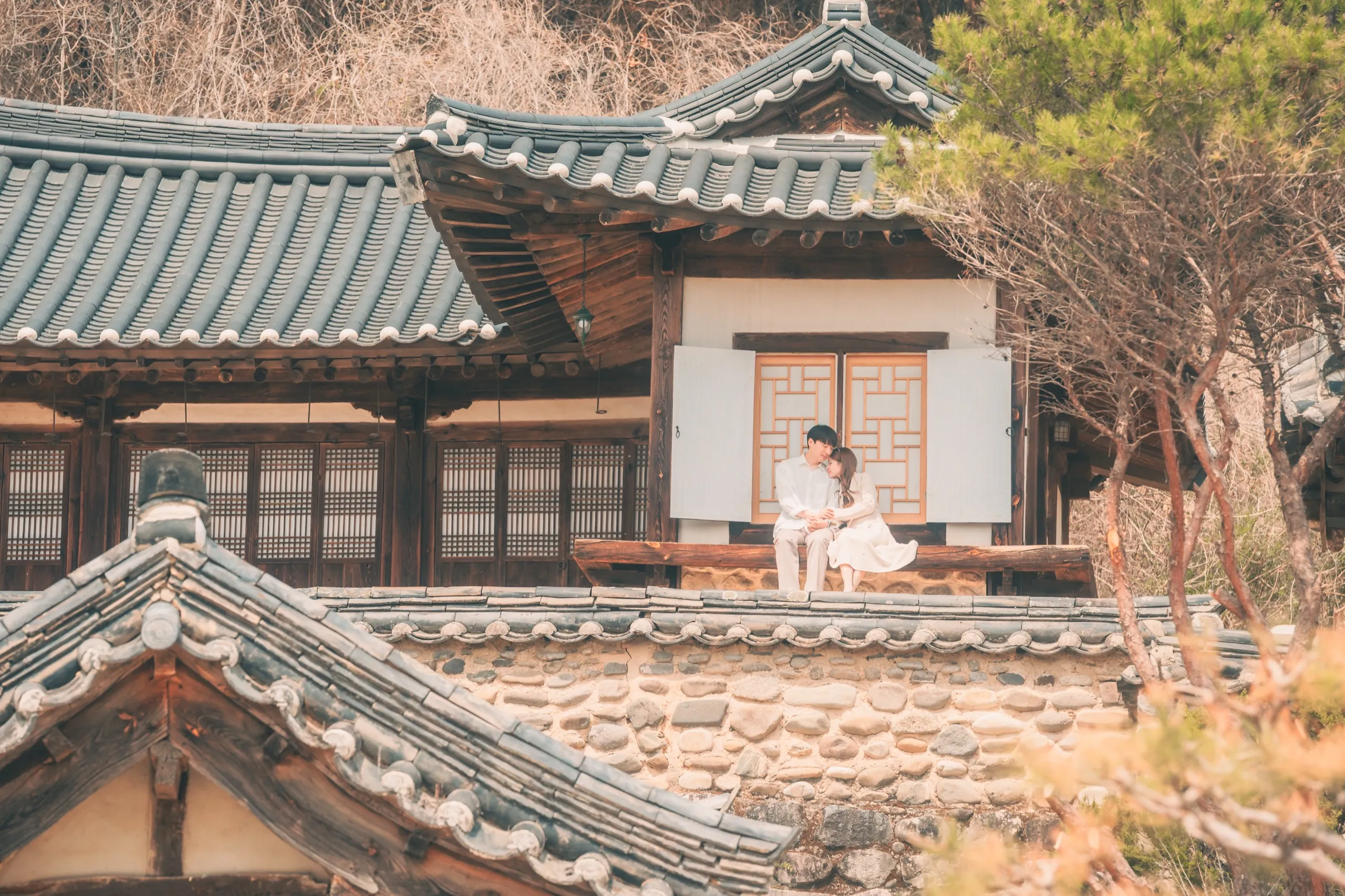
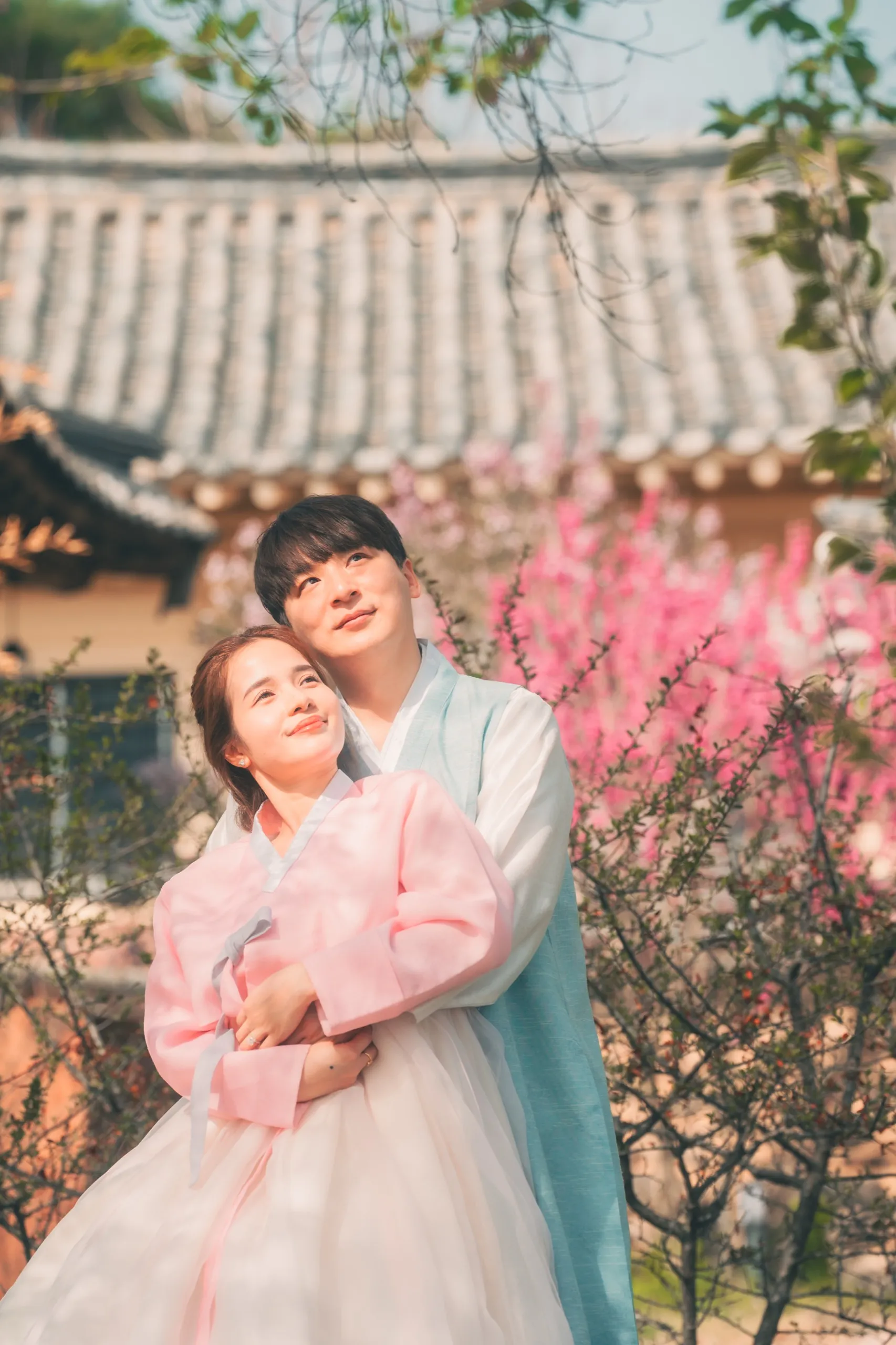
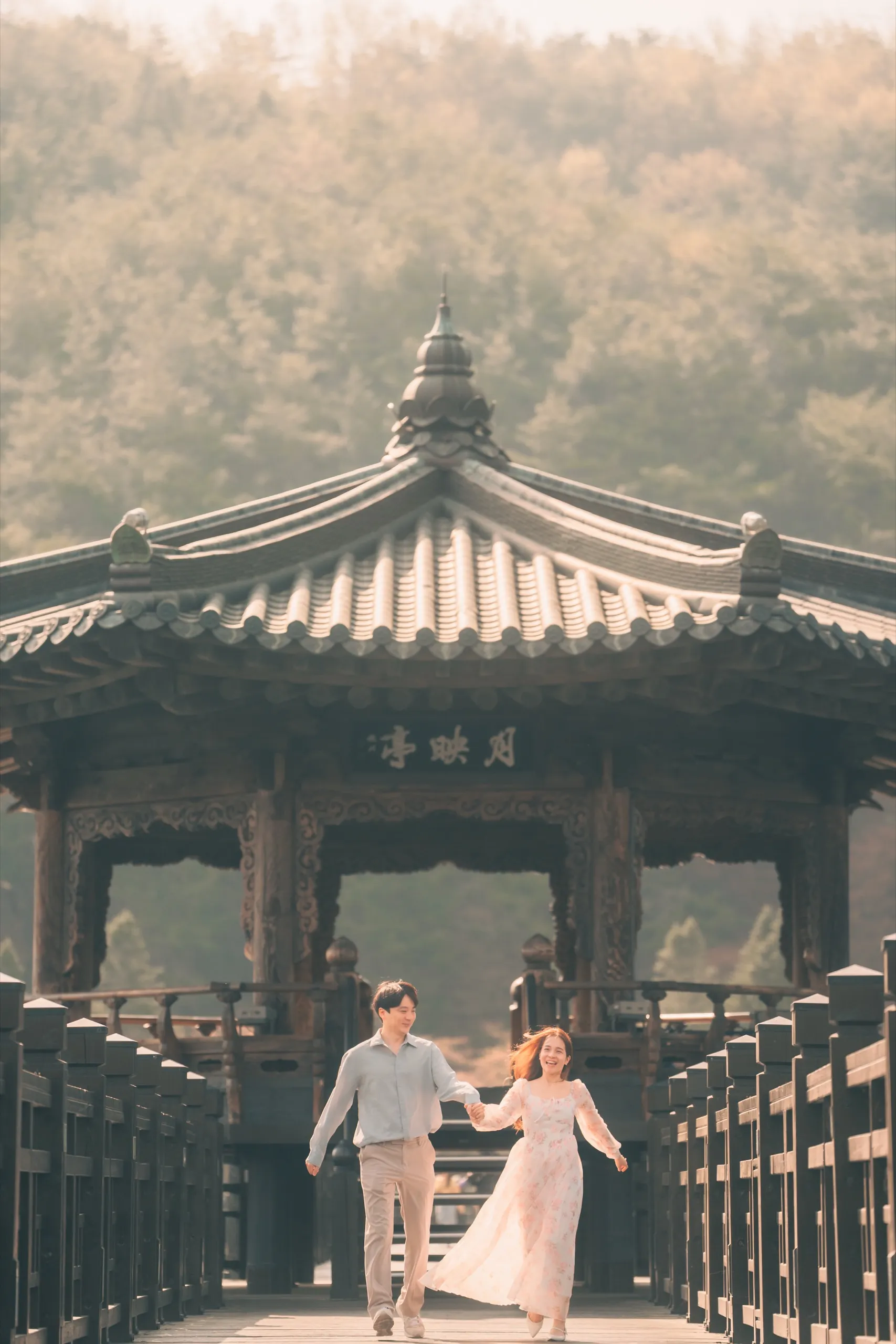
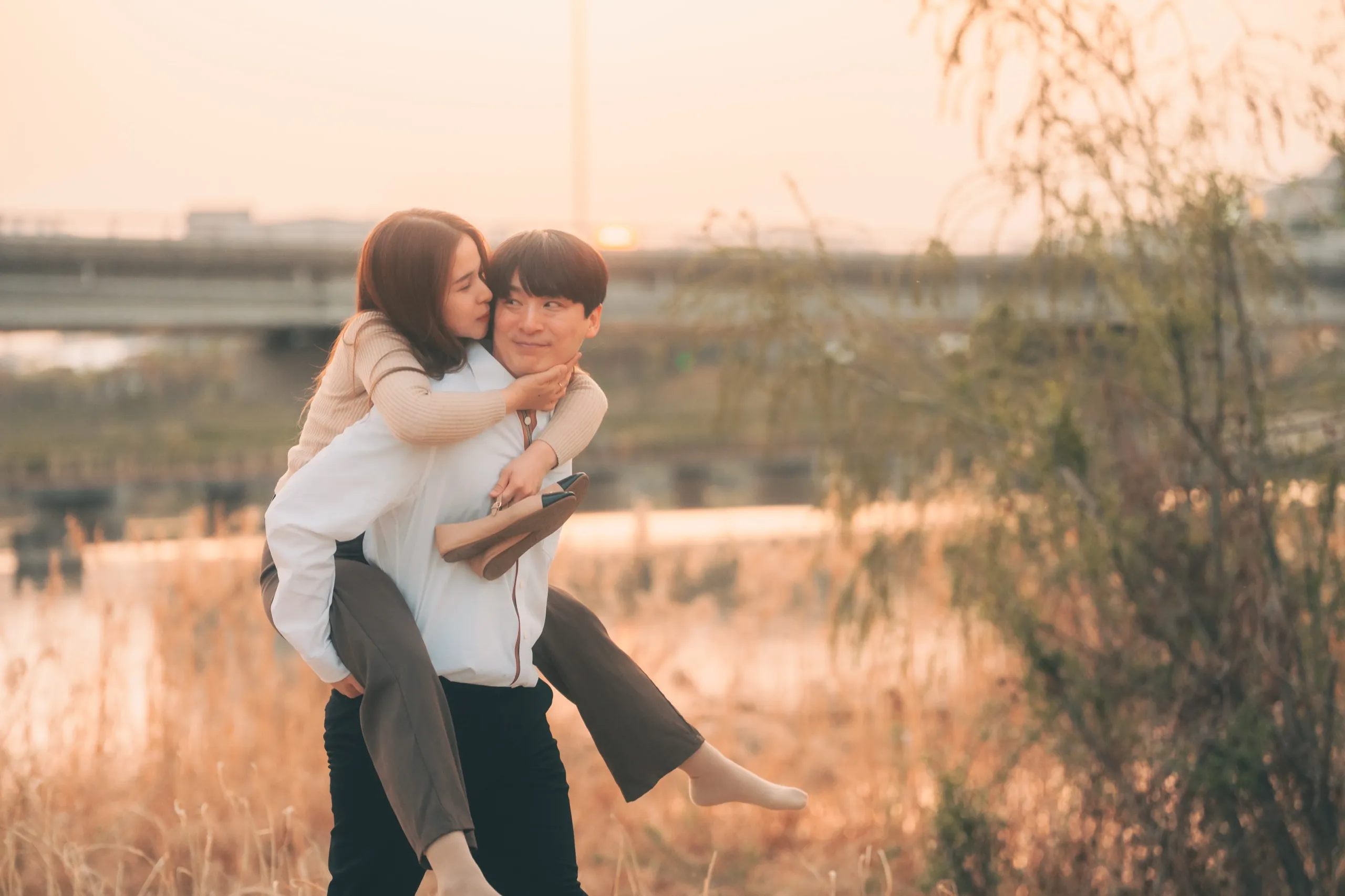
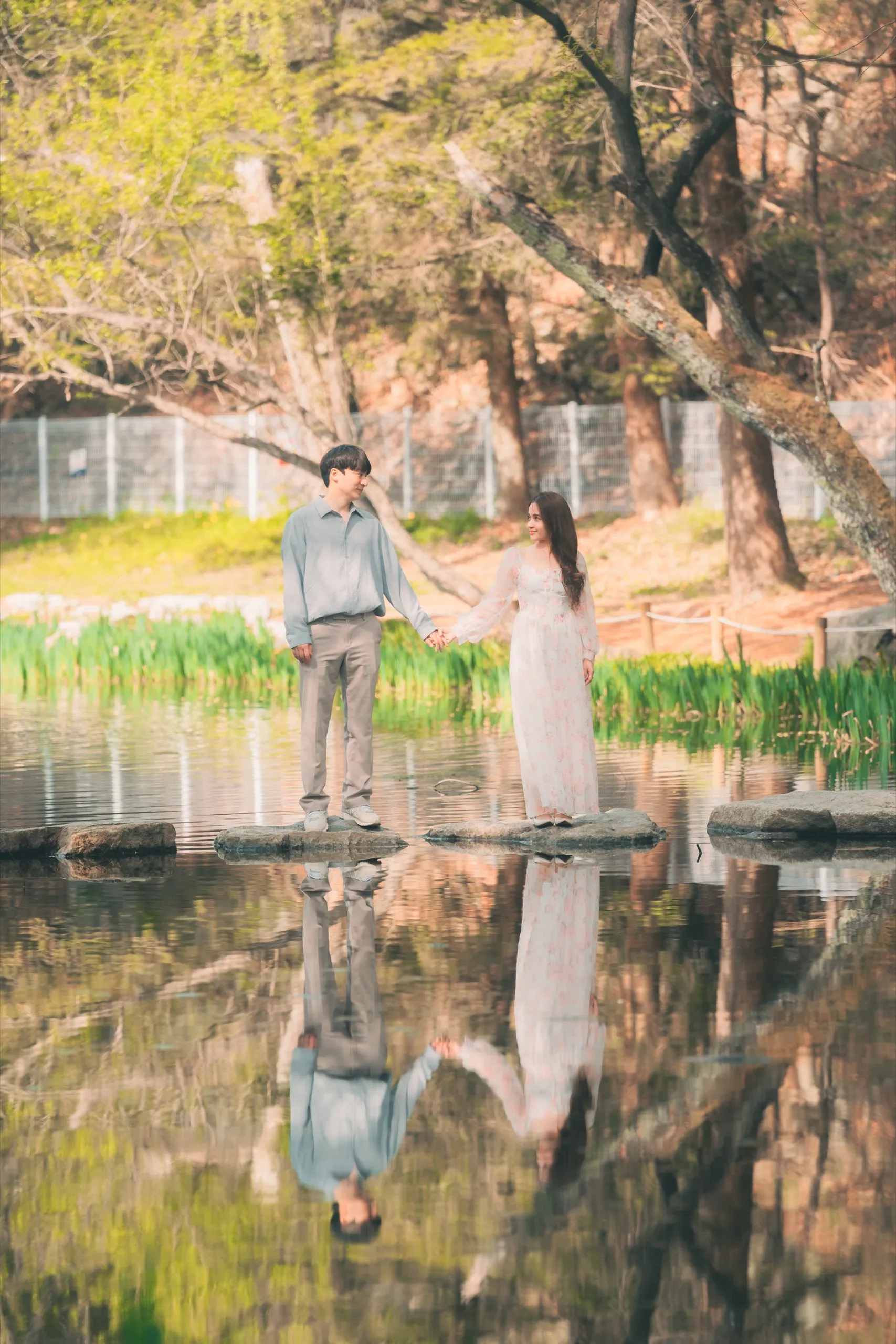
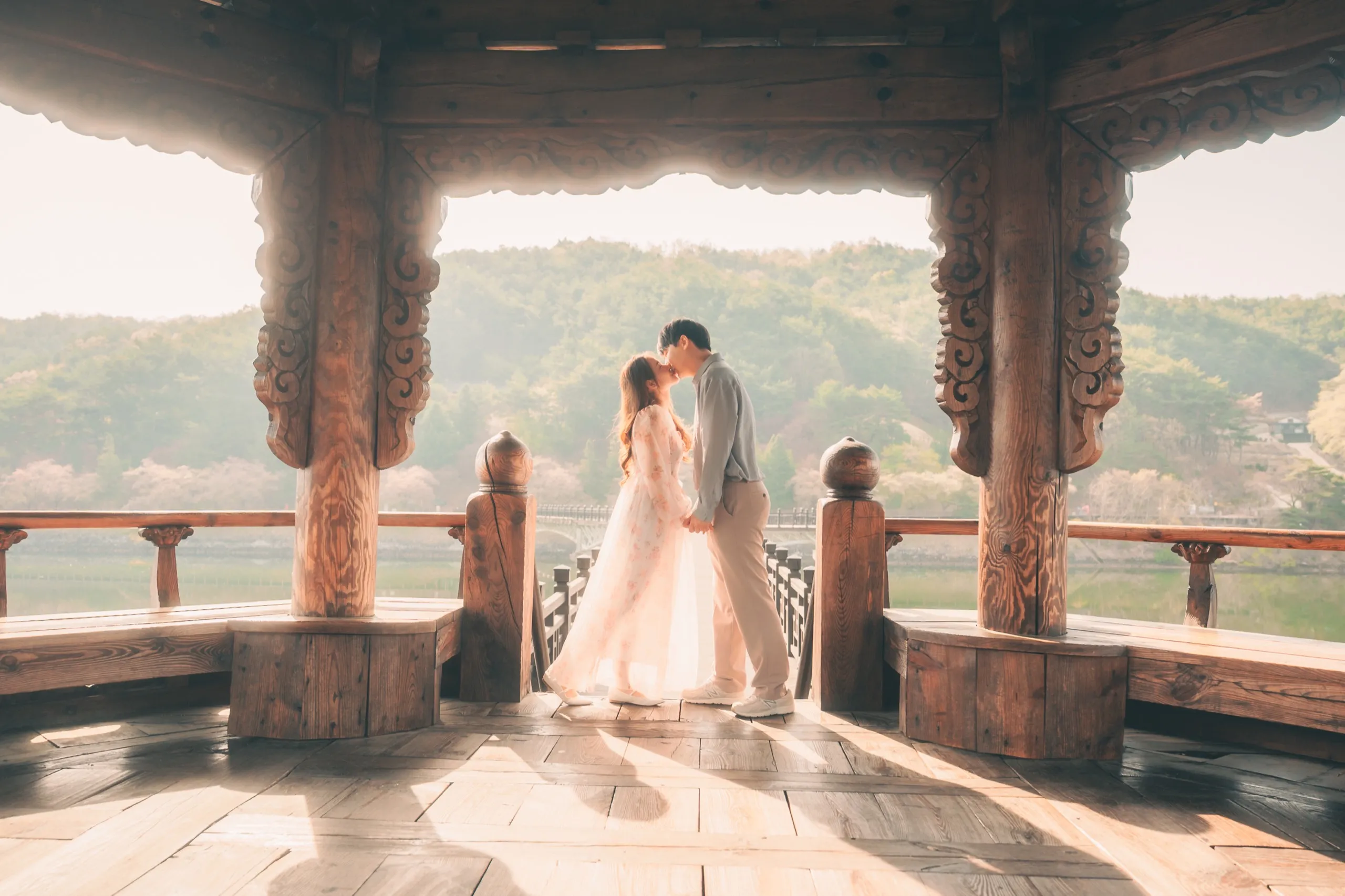
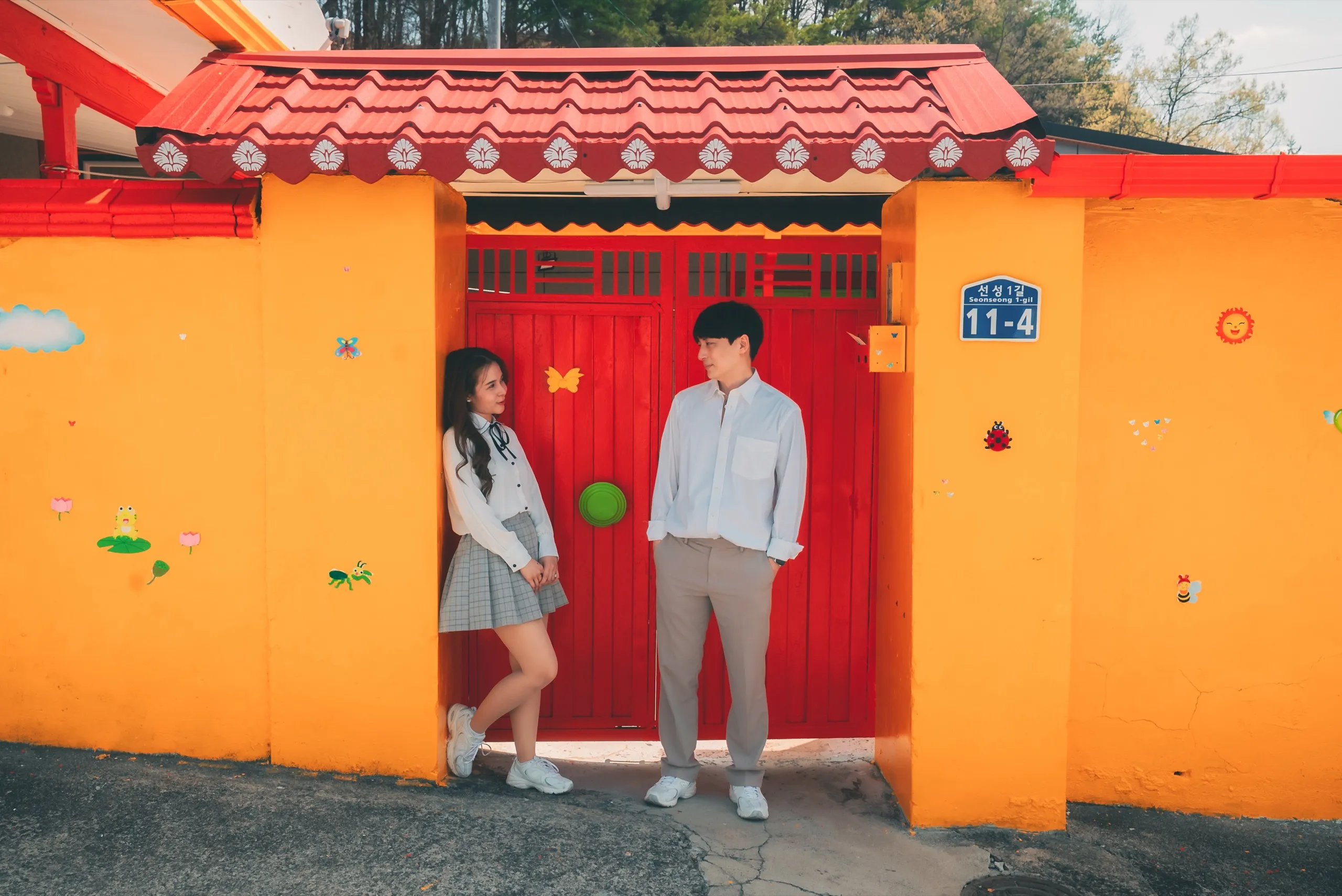
This one was a full-day pre-wedding: a short preview, the full film, and the photo set, delivered together. The photos come from the same two days, so the booth, the hanbok, and the sparklers by the caravan show up in both. It suits couples who have a story to tell from the beginning and are willing to talk on camera; that work starts in the pre-interviews and the written Q&A, well before the shoot.